
14 July: French National Day
Region Molsheim-Mutzig
Every year, the local authorities in the region, particularly the towns of Molsheim and Mutzig, organise celebrations to mark the national holiday.
You can find the local authorities’ programme below
July 13.
From 7 pm in MUTZIG
The town of Mutzig invites you to its traditional Revolution Evening to mark the National Holiday!
On the programme:
7.00 pm Street entertainment and food stalls
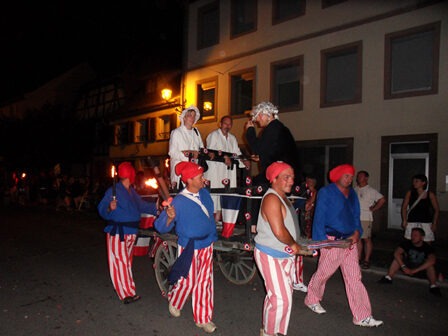
9.45 pm Procession of the Sans-Culottes
11.00 pm Fireworks
11.30 pm Ball organised by the Mutzig Fire Brigade Association.
Brass bands and local clubs will provide entertainment in the town centre.
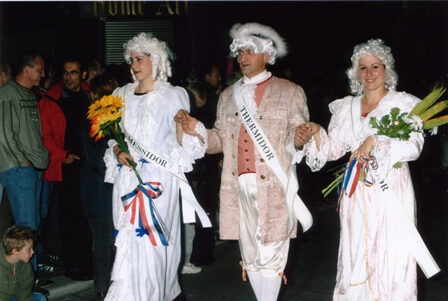
Come and see the floats depicting various scenes from the French Revolution.
Celebrations
July 14.
MUTZIG in the town centre
The day after the revolutionary celebrations on 13 July,
a military parade and procession will take place at 5 pm in Mutzig town centre to mark the national holiday.
The celebrations, attended by numerous civilian and military dignitaries (the 44th Signals Regiment, the Molsheim and surrounding area fire brigade’s territorial unit, and the Molsheim gendarmerie company), as well as the brass band from Kuttolsheim, are always a great success.
A Brief History of the French Revolution
An economic crisis. The reign of Louis XVI coincided with a difficult economic situation: falling agricultural prices, a slump in the textile industry, etc. …
A social crisis. …
A political crisis.
Symbols
A brief history of the Phrygian cap
Loris Chavanette. – The Phrygian cap is one of the symbols of the French Republic and indeed of the French people as a whole.
At the time of the French Revolution, it was first and foremost a sign of solidarity with our motto: ‘Liberty, Equality, Fraternity’. It symbolises a commitment to French values of universal significance.
The Revolutionary Song, the National Anthem:
La Marseillaise
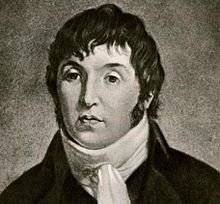
Claude Joseph Rouget de Lisle, a captain in the engineers stationed in Strasbourg, composed the ‘War Song for the Army of the Rhine’ on 25 April 1792 at the request of Frédéric de Dietrich, the city’s mayor, shortly after revolutionary France had declared war on the King of Bohemia and Hungary.